Author Archives: Eapen Thampy

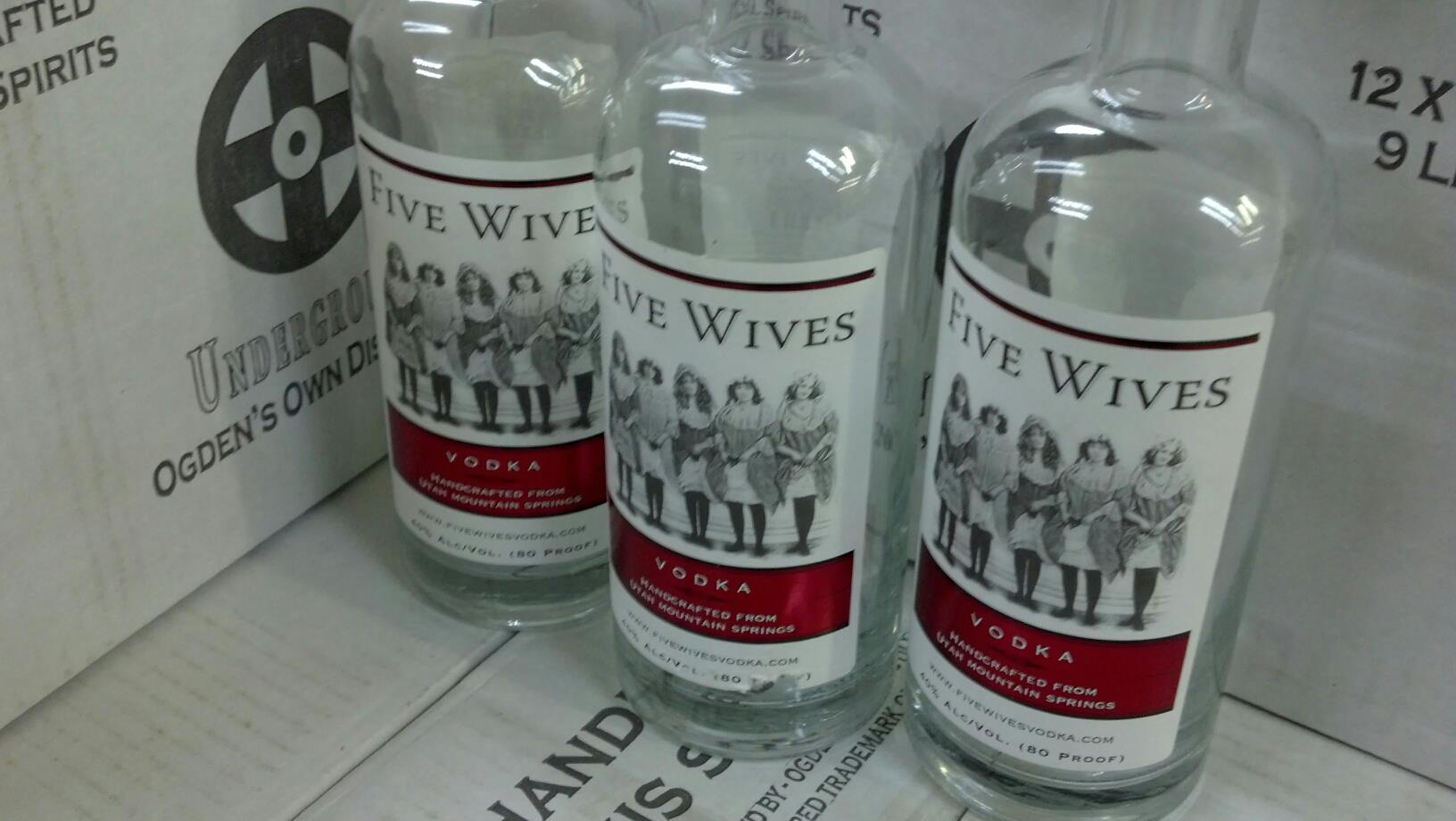
Regulators Chase “Five Wives” Out of Idaho

Ben Winslow from Salt Lake City’s own Fox 13 reports on the decision by Idaho liquor regulators to bar sales of vodka from Ogden, Utah producer Ogden’s Own. In a letter to the distillery, Idaho Liquor Division Deputy Director of Procurement Howard Wasserstein notes that:

Social responsibility is very important aspect of the marketing and sales of distilled spirits in the State Idaho. The Idaho State Liquor Division is responsible for the safety and well-being of the citizens of the citizens of our State.

Products we feel are marketed toward children, or are in poor taste with respect to our citizens will not be authorized for distribution.

We feel Five Wives Vodka concept is offensive to a prominent segment of our population and will not be carried.

Ogden’s Own replies:

“We have a product that has sold nearly 1,000 cases in six months in Utah,” explained Steve Conlin, partner and vice president of marketing at Ogden’s Own Distillery. “If the reaction is because of a religious concern, we think they are extremely misguided.”

“We can only presume he means Mormons,” Conlin continued. “Though that makes little sense as they allow Polygamy Porter from Wasatch Beers of Utah to be sold. We’re a little dumbfounded by it all.”

According to the U.S. Census, 27 percent of Idaho’s population are members of The Church of Jesus Christ of Latter-day Saints.

Ogden’s Own Distillery applied for general listing and was rejected two months ago. The state’s position now blocks establishments from even receiving ‘special orders’ of the product.

 Idaho has one of the most restrictive liquor licensing laws in the nation, according to this study done by Michigan’s Mackinac Center for Public Policy. The study, written by Michael LaFaive and Anthony Davies, finds that:

Graphic 1 shows total alcohol-attributable deaths per 100,000 residents in 48 states during the period from 2001 through 2005, the most recent years for which data are available from the Centers for Disease Control and Prevention.[†] The data include deaths of both adults and children. The states in Graphic 1 are grouped from left to right by the four degrees of liquor control: heavy-control, moderate-control, light-control and license states.

The four groups are essentially indistinguishable. If state alcohol controls worked in proportion to their scope, the bars would tend to rise like stair steps from left to right across the graphic. Instead, to take just one example, the average alcohol-attributable fatality rate is lower in the license group than in the low-control group (28.46 vs. 29.95 deaths per 100,000 people, respectively). The same holds true for the under-21 fatality rate, where the average in license states is 1.70 and the average in light-control states is 1.84.[8] Statistical tests do not indicate that a state’s alcohol control regime affects average alcohol-attributable death rates.[‡]

Note that of the 10 states with the lowest fatality rates, eight are license states. The two others are a light-control state, Iowa (eighth), and a moderate-control state, New Hampshire (10th); none of the top 10 is a high-control state.

Perhaps it is time for Idahoans to re-evaluate the goals and aims of their public policy, and to particularly consider abolishing Idaho’s restrictive alcohol-control regime with something more sensible that focuses more narrowly on the public safety issues that are really at stake.
Tagged , , , ,

The Natural Law of Children

John McGinnis profiles the legal scholar Harold Berman at the Library of Law and Liberty:

No sketch of Harold Berman can be complete without a reference to an epigram in which he summarized children’s natural grasp of natural law:   A child says, ‘It’s my toy.’ That’s property law,” he said. “A child says, ‘You promised me.’ That’s contract law. A child says, ‘He hit me first.’ That’s criminal law. A child says, ‘Daddy said I could.’ That’s constitutional law.”

Tagged , ,

(Alcohol) Prohibition Was Originally a Popular Policy

Levine & Reinarman in 1991 write:

The anti alcohol, or temperance, movement was created in the early nineteenth century by physicians, ministers, and large employers concerned about the drunkenness of workers and servants. By the mid 1830s temperance had become a mass movement of the middle Class. Temperance was not, as is sometimes thought, the campaign of rural backwaters; rather, temperance was on the cutting edge of social reform and was closely allied with the antislavery and women’s rights movements. Always very popular, temperance remained the largest enduring middle-class movement of the nineteenth century (‘Leaven 1978, 1984; Tyrell 1979; Gusfield 1986; Rumbarger 1989; Blocker 1989).

The temperance campaign was devoted to convincing people that alcoholic drink in any form was evil, dangerous, and destructive. Throughout the nineteenth century, temperance supporters insisted that alcohol slowly but inevitably destroyed the moral character and the physical and mental health of all who drank it. Temperance supporters regarded alcohol the way people today view heroin: as an inherently addicting substance. Moderate consumption of alcohol, they maintained, naturally led to compulsive use to addiction. From the beginning, temperance ideology contained a powerful strand of fantasy. It held that alcohol was the major cause of nearly all social problems: unemployment, poverty, business failure, slums, insanity, crime and violence (especially against women and children). For the very real social and economic problems of industrializing America, the temperance movement offered universal abstinence as the panacea.

From roughly the 1850s on, many temperance supporters endorsed the idea of prohibition. after the Civil War the Prohibition Party, modeled on the Republican Party, championed the cause. Nineteenth-century prohibitionists believed that only when sufficient numbers of party members held office would prohibition be practical because only then would it be fully enforced. ‘

In the twentieth century a new prohibitionist organization – the Anti-Saloon League – came to dominate the movement (Odegard 1928: Timberlake 1963; Sinclair 1965; Gusfield 1968; Kerr 1985; Rumbarger 1989). The League patterned itself on the modern corporation, hiring lawyers to write model laws and organizers to raise funds and collect political debts.

The League put its considerable resources behind candidates of any party who would vote as it directed on the single issue of liquor. By expanding the numbers of elected officials beholden to it, and by writing laws for those legislators to enact, the League pushed through many local prohibition laws and some state measures. In 1913 the League finally declared itself in favor of Constitutional prohibition. Increasing numbers of large corporations joined the many Protestant churches that had long supported the League. Then, during the patriotic fervor of World War 1, prohibitionists mobilized the final support for a constitutional amendment. Among other arguments, prohibitionists claimed that in the United States the heavily German beer industry was sapping American will to fight.

By December 1917, both houses of Congress had voted the required two-thirds majority to send to the states for ratification a constitutional amendment prohibiting the manufacture, sale, transportation, import, or export of intoxicating liquor. In November 1918 Congress passed the War Prohibition Act, which banned the manufacture and sale of all beverages including beer and wine that contained mote than 2.75 percent alcohol. On January 16th, 1919, Nebraska b›came the thirty-sixth state to ratify the Eighteenth Amendment, which was to go into effect in one year. In October 1919 Congress overrode President Wilson’s veto to pass a strict enforcement act of prohibition known by the name of its sponsor, Andrew Volstead of Minnesota, chair of the House Judiciary Committee. The Volstead Act defined as “intoxicating liquor” any beverage containing more than 0.5 percent alcohol.

At midnight on January 16, 1920, the Eighteenth Amendment took effect. The famous minister Billy Sunday celebrated by preaching a sermon to 10,000 people in which he repeated the fantasy at the heart of the temperance and prohibition crusades:

The reign of tears is over. The slums will soon be a memory. We will turn our prisons into factories and our jails into storehouses and corncribs. Men will walk upright now, women will smile, and the children will laugh. Hell will be forever for rent. (quoted in Kobler 1973, 12)

Tagged , , ,

The Economics of the Innocence Project

As you may know, the Innocence Project is a “nationally recognized litigation and public policy organization dedicated to exonerating wrongfully convicted individuals through DNA testing and reforming the criminal justice system to prevent future injustice”. Geoff Gerling, executive director of the Midwest Innocence Project, relates that the process of exoneration is an expensive one:

  • In cases where there is no DNA evidence, and legal services are obtained pro bono, the cost of navigating the legal system to obtain an exoneration can be as high as $750,000. Without pro bono legal services, you’re looking at at least a million, and probably more.
  • When DNA is available for analysis, add $10,000 to $100,000.
  • It takes ordinarily 7 to 10 years to obtain an exoneration for a false conviction.

On Monday, we got an idea of the number of false convictions that have been overturned in the US over the last 23 years:

More than 2,000 people who were falsely convicted of serious crimes have been exonerated in the United States in the past 23 years, according to a new archive compiled at two universities.

There is no official record-keeping system for exonerations of convicted criminals in the country, so academics set one up. The new national registry, or database, painstakingly assembled by the University of Michigan Law School and the Center on Wrongful Convictions at Northwestern University School of Law, is the most complete list of exonerations ever compiled.

The database compiled and analyzed by the researchers contains information on 873 exonerations for which they have the most detailed evidence. The researchers are aware of nearly 1,200 other exonerations, for which they have less data.

They found that those 873 exonerated defendants spent a combined total of more than 10,000 years in prison, an average of more than 11 years each. Nine out of 10 of them are men and half are African-American.

Tagged

All hail Law Enforcement Against Prohibition (LEAP)

Calvina Fay, the unofficial “Queen of the Drug War”, has an article titled “America Needs Leaders, Not Labels” in the Spring 2011 edition of “The Coalition” (the official publication of the National Narcotics Officers Association). In it, she says this about the major drug policy reform groups (page 18):

Everyone who works on drug related issues knows the names of the major organizations fighting to legalize and normalize drug use: Marijuana Policy Project (MPP), the National Organization to Reform Marijuana Laws (NORML), the Open Society Institute (OSI) and the Drug Policy Alliance (DPA). Their money and their vast numbers of supporters enable their voices to be heard above all others.

Another legalization group gaining momentum is Law Enforcement Against Prohibition (LEAP). According to their mission statement, LEAP is made up of current and former members of law enforcement who believe current drug polices fail to address the problems of crime, drug abuse, and addiction. However, membership is not actually limited to those currently or formerly associated with law enforcement so even criminals can become one of their members. By continuing to fight a war on drugs, according to LEAP, the government has only increased the societal problems associated with drug use. Their idea of effective drug policy is to legalize and regulate illicit drugs.

Grassroots community efforts to battle legalization initiatives and legislation depend upon and turn to law enforcement for support in keeping illegal drugs off the street and out of the hands of our youth. With this in mind, one can only imagine the mixed message the community receives from a group like LEAP that claims to represent the mindset of law enforcement.

LEAP does not release information on its members, so it is impossible to determine how many current or past members of law enforcement their alleged 15,000 membership actually represents. what is clear is that they exploit the integrity, commitment of service, and community protection that law enforcement represents while pushing their agenda to “end prohibition” and “legalize all drugs so we can control and regulate them”.

It is imperative that we remain united to counter any and all pro-drug messages coming from groups like LEAP. Law enforcement has always been the natural ally in fighting drug use and abuse, and more importantly, law enforcement provides valuable insight into what is really happening on the streets of America’s communities. Law enforcement bears witness on a daily basis to the dangers illegal drugs impose on our nation’s youth, and law enforcement’s experiences and voices must be heard in this battle.

All things considered, high praise for LEAP! And I am struck by the fact that Fay is willing to characterize drug policy reform groups and their constituencies as the enemy, in a war that is frighteningly real. I encourage you to support all the groups listed above, and you should really consider donating to LEAP.

Tagged , , ,

Krugman on the demand for serendipity

The problem with digital books is that you can always find what you are looking for but you need to go to a bookstore to find what you weren’t looking for.

From the Boston Globe.

The Bottom 1%

David Henderson is on point:

We hear a lot about the top 1%. We don’t hear a lot about the bottom 1%. There are about 313 million people in America today. 1% of 313 million is 3,130,000. In our prisons today are 2,200,000 people. So the people in prison are 2/3 of one percent. And their wages are typically about 23 cents an hour. They are, essentially, the bottom 1%.
Many of them are there for violent crimes, theft, fraud, and other such things. But hundreds of thousands of them are there for buying, selling, or producing illegal drugs. The drug war has put them there. And we taxpayers are paying $30,000 a year and more to keep them there.
So let me get this straight: high-income people are paying lots of taxes so that the government can put poor people in prison and keep them poor or put non-poor people in prison and make them poor.
We hear the occupy people advocate taxing the top 1% more. I’ve got a better idea: let’s tax the top 1% less–they’re already paying a disproportionately high share of taxes–and let a few hundred thousand of the bottom one percent out of prison and out of their grinding poverty in prison.

Tagged ,

Ending KC Drug Prohibition Solves Violence, Need for Intrusive Govt. Surveillance Tech

Today Tony’s Kansas City highlights a statement by former City Council candidate and liberty activist Tracy Ward on the deployment of “Scattershot” technology to pick up gunfire activity through Kansas City:

Tracy Ward: “Why is this shot spotter program teaming with the ATA? What project for the ATA was the money originally earmarked for that they’re now using for the shot spotter? There just seems to be a lot of back room dealing in this situation. Where were the public meetings and the opportunity for testimony before this was put into place? The news just reports the hope that these surveillance mechanisms might be used to stop crimes with little statistical data to back up that idea. In reality, the public should know that those microphones in these shot spotters can pick up and listen to more than just gunfire.”

Tony responds:

Right now the rate of local violence and homicide is so bad that the locals seem more worried about security than guarding against any threat to civil liberties. Nevertheless, Tracy’s questions about new Kansas City surveillance tech are consistent with her local efforts to raise awareness about challenges to freedom in the digital age.

The elephant in this room is the cause of this wave of violence and homicide. Tracy is right in her claim that these surveillance mechanisms are worryingly intrusive, and Tony is right that Kansas City right now is focused on ways to secure life and property from violent criminals. Yet there is at least one policy option that urgently needs to be discussed as part of the solution, and for this I turn to the words of Neill Franklin, a retired police officer with 33 years of drug law enforcement:

Primarily, violence in this country. The cartels are now in over 200 cities in our country–with that comes violence. We have our neighborhood gangs–with that comes violence. And it is all attributed to prohibition of drugs in this country. And in order to eliminate that violence and harm we have to end our war on drugs.

You should also watch this video of Neill Franklin speaking to the National NAACP last year. His speech is a powerful indictment of the War on Drugs from a law enforcement perspective:
I submit that until we can deal with Kansas City’s gang problem, citizens will continue to be threatened by increasingly intrusive government surveillance, which Tracy fears, and Kansas City residents will continue to be insecure in their persons and property, which Tony fears. Yet we don’t need to live like this. Kansas City needs to come to a realization that the time is long past for this discussion to happen at all levels of our government.
Indeed, Kansas City may look to the example set by Columbia, Missouri. Popular discontent with the use of SWAT teams to enforce marijuana and drug search warrants forced the City Council and Police Department to change policy. Indeed, Columbia Police Chief Ken Burton has even endorsed marijuana legalization, indicating that this would do much to undermine criminal activity:
For taking these stances, and for further reforming the Columbia Police Department, Chief Burton has been been lauded by civil liberties and citizen groups in Columbia, who have expressed support for his leadership quite vocally. Yesterday, Keep Columbia Free Vice President Abhi Sivasailam noted to ABC 17 (KMIZ):
“All of these petitions are geared towards supporting Chief Burton and demonstrating there is a lot of public support for his tenure as police chief,” Sivasailam said.
The KCF petition points out Burton’s reforms within the department that have been applauded such as his limited use of SWAT teams when serving warrants and his endorsement of the legalization of marijuana.”I think he is a progressive and critical thinker about the laws we have instead of just blindly enforcing laws,” Sivasailam said, “The petitions are also meant to balance out opposition from CPOA’s request of removing the chief. We want to make sure the city manager hears everyones voice on this not just CPOA’s narrow one.”

What are the political risks to Burton’s stance in Columbia? As he is finding out, none. I’ll leave you with this final quote from an article in today’s Columbia Tribune:

Burton said he does not believe a majority of his department agrees with Cuttle and that the officers union is “running rampant.” He also said he believes the officers who are most vocal are having a hard time adjusting to accountability.
“Nobody likes being held accountable,” Burton said. “Rules had to be put into place to get things under control. It started with SWAT. Changes are not always comfortable.”

Matthes said the union told him its goal is to get Burton fired and that it plans to engage media outlets to foster a groundswell of public support for Burton’s ouster. “The exact opposite is what’s happening,” Matthes said. “What I’m hearing from the community, they don’t like the approach the fraternal order is using.”
Matthes said he also was contacted by officers who expressed embarrassment about the union’s tactics. Although he said he respects the views of officers who back the union’s statements, it is “painful” to see the union speak for others who do not agree.

 Kansas City, what say you?
Tagged , , , , , ,

United we stand, divided we blight

I see the eminent domain argument against the Enhanced Economic Zone (EEZ) blight designation of most of Columbia, Missouri Enhanced Economic Zone as an important facet of the opposition to this plan, but here I want to flesh out what I see as a fundamental principle driving the vigorous opposition to this plan. It simply isn’t fair in the way it allocates economic opportunity and public investment to the rich and politically connected, and it is that failure that must be recognized first and foremost because it is the inequity and unfairness of government policy that underlies most of the deep divisions in our polity. Indeed, I cannot remember a time when America was more sharply divided against itself.

We are a diverse polity. In some ways that gives America unique strength. But it also means that there is much difference between people: Religion, culture, sometimes language. History tells us of the old conflicts that still cast their specter over our mutual association. I think sometimes we forget how deeply the scars of war, slavery, and other oppressions have marked our society.

The prime virtue of America was that it offered equal opportunity. Equal opportunity before the law, the freedom to pursue happiness. For those escaping the shackles of a particular bondage, this freedom is like air to a drowning man.

But we must not forget these principles that are the foundation of our mutual association. The effort to carve up our public weal, to submit it to the appropriations of the powerful and connected, is an anarchic project. To prioritize one person or group’s needs and desires above the rest inspires resentment, destroys trust between individuals and groups, and foments disrespect for the law itself.

Let us quit this proposal of carving out economic benefits to companies and individuals who seek personal profit at the expense of the average citizen. I propose instead the City of Columbia instead focus on the provision of its core public services to citizens. Certainly our police department is a prime example of how poorly provided public services can alienate citizens and tarnish our city’s reputation. Our schools face chronic problems of underachievement, and many of our citizens have immediate needs that might be appropriately provided through refinements and investment in the basic city infrastructure. Let us focus our public policy in areas where we can provide immediate service to the citizens of Columbia.

And I want to suggest that it is not such a bad thing to stop competing with other cities to offer companies tax breaks for relocation and promises of “jobs”. Indeed, by breaking from this race to the bottom, Columbia has a chance to show national leadership on this issue. Wouldn’t that be something?

Tagged , , , , , ,

The President has the authority to decline to enforce an unconstitutional law

Let me start with a general proposition that I believe to be uncontroversial: there are circumstances in which the President may appropriately decline to enforce a statute that he views as unconstitutional.

1994 Memorandum to White House Counsel Abner Mikva by Assistant Attorney General Walter Dellinger

Tagged

Wise words from Eugene Volokh

Never fall into the trap of actually believing that our legal fictions and our metaphors are real.

-From yesterday’s post, A Metaphor Will Take You Only So Far

Tagged

Backfile checking Rex and everyone else: the forgotten history of the KKK and the NEA

Last month, retired philanthropist Rex Sinquefield ignited a storm of controversy by claiming that the public school system was a creation driven at least partly by the efforts of the Ku Klux Klan. Sinquefield cited an op-ed in an obscure Missouri publication for support of this claim, but wound up apologizing for his statement. And that is where the debate ended.

It is unfortunate that no one has thought to consider this subject further. That is because there is documented history of the involvement of the Ku Klux Klan and other white supremacist organizations in the evolution of American public education and the National Education Association. Consider this excerpt from a review of Doug Lawson’s book “The Department of Education Battle, 1918-1932: Public Schools, Catholic Schools, and the Social Order“:

The efforts of the educational trust were supported by a number of organizations that fostered civic progressivism, including two organizations not usually associated with reform: the Southern Jurisdiction of Scottish Rite Masonry and the Ku Klux Klan. Both of these groups advocated a federal department of education, a national university, and compulsory public schooling. Although the NEA never went on record as favoring compulsory public education, its close association with the Southern Scottish Rite and its failure to distance itself from the KKK convinced Catholics that the NEA intended to use a department of education to drive parochial schools out of existence. The church countered the NEA’s efforts through intense political lobbying by the National Catholic Welfare Conference (NCWC). Douglas J. Slawson’s fascinating look at a relatively unexplored episode in American history recounts fourteen years of maneuvering and counter-maneuvering by the NEA and NCWC over attempts to establish a federal department of education and compulsory public schooling.

Or this excerpt from Wikipedia’s entry on compulsory public education:

The movement for compulsory public education in the United States began in the early 1920s. It started as a disorganized Catholic opposition to the Smith-Towner bill, a bill that would eventually establish the National Education Association and provide federal funds to public schools. Eventually, it became the movement to mandate public schooling and dissolve parochial and other private schools.[1] The movement focused on the public’s fear of immigrants and the need to Americanize; it had anti-Catholic overtones and found support from groups like the Ku Klux Klan.[2]

The Oregon School Bill aimed to close private Catholic schools in Oregon and have the children sent to the public school system. Since public schools taught state-mandated curricula, the Klan saw this measure as a way to “Americanize” Catholic children and limit the amount of “non-Protestant” instruction they received. Oregonians who supported the Compulsory Education Bill, including the Oregon Klan, made the argument that private and parochial schools were often controlled by non-American organizations that emphasized foreign ideologies over traditional American values.[6]

 And the same thing happened in Indiana, where the Klan also pushed an explicitly anti-Catholic, anti-private schools agenda:

This “second” Klan was organized in 1915 in Atlanta . In 1920, the southern group began a national publicity campaign, and the first Indiana chapter opened in Evansville in the fall of that year. A few people joined, but then a huge membership drive led by D. C. Stephenson from 1922-1924 brought in 118,000 members across the state (see document 6). Stephenson moved to Indianapolis and started a newspaper,The Fiery Cross, which ran from December 1922 to February 1925. In 1924, Klan numbers overwhelmed the state’s Republican Party and elected the governor (Ed Jackson), a majority in both houses of the legislature, and nearly all of the state’s thirteen congressmen.

The Klan’s legislative program for 1925—directed against parochial schools and Catholic influence in public schools—was a complete failure. But other problems proved more pressing. D. C. Stephenson, the leader (Grand Dragon) of the Klan in the state since 1923, was a charming personality and powerful orator; he was also arrogant, cunning, evil, and hedonistic. Early in 1925, he assaulted, raped, and held captive his young secretary Madge Oberholtzer, who took poison and died one month later. Stephenson was indicted, and when Governor Jackson (who had now distanced himself from the Klan) refused to pardon him, Stephenson leaked information that to Jackson ‘s trial for bribery (the governor was acquitted on a technicality).

 
So where does this leave us?
Sinquefield was clearly wrong to imply that public schooling is entirely the creation of the Ku Klux Klan. But he was not wrong to imply that racist intent and KKK muscle weren’t involved in the evolution of public education in the United States. There is plenty of reliable historical evidence on that point. What is unfortunate is the unwillingness of the existing media to be aware of the historical record on this point, and Sinquefield’s inability to defend his statement with more than a passing reference to an obscure newspaper article.
I don’t think this is an argument that really has a policy impact, at least not apparently, as Sinquefield claims. I would note that modern day white supremacists now probably understand that they have no chance of determining the practice of public education, and are probably more interested in the prospects of obtaining school vouchers to support their own private schools with.
Tagged , , ,

Great literature and the advent of copyright

“Most of the world’s great literature was written before the first copyright statute, the Statute of Ann, enacted in 1710.”

That’s from a post today by Richard Posner on the future of libraries and books.

Tagged

Against Paul Armentano and NORML’s bogus federal lawsuit

Last year, attorneys from the National Organization for the Reformation of Marijuana Laws filed a federal lawsuit challenging the Department of Justice’s crackdown on the California medical marijuana industry. Though I support efforts at checking federal law enforcement over-reach, this lawsuit is so inept that I thought it was worth writing about. First, here’s the link to yesterday’s story on the NORML blog about the latest dismissal of the case. You should read it if you are not already familiar with the case.

http://blog.norml.org/2012/03/02/federal-governments-crackdown-on-medical-cannabis-not-unconstitutional-federal-judge-rules/

I want to make a few points. First, NORML’s attorneys base the entirety of their lawsuit on the claim that the Ogden memo somehow represents a promise or a statement made in court to a federal judge. However, the Ogden memo is literally just a memo that the DOJ released, and was never, so far as I know, represented in a federal court as a promise or a statement that the judiciary can hold the DOJ to. For NORML to make this claim flies in the face of reason. No wonder the judge dismissed this claim without a hearing. There was nothing to hear.

Second, the NORML claim is laughably spurious in attempting to relitigate the Commerce Clause issues the Supreme Court decided in Raich v. Gonzales (2006). NORML basically says “We know the Supreme Court decided this question already, but can you please check and see if they got it wrong?” Aside from being a completely wrong way to get the court to re-evaluate a decision, it is lazy, because there NORML makes NO argument as to why this question should be relitigated. No new constitutional claim, no spiffy new
argument, zilch. NORML’s claim is literally just a claim without warrant. Also, NORML’s lawyers seem completely unaware of the impact of the Bond v. US line of cases and the implications that this decision might have forsuch a challenge to the federal authority (tip: you might want to incorporate Bond).

If you were really interested in relitigating Raich, you would file an amicus brief in the Supreme Court litigation scheduled for this month against Obama’s Affordable Care Act, because that is where we can get the Supreme Court to meaningfully restrict Congress’s Commerce Clause powers in a way that would lay the foundation for challenging the constitutionality of the Controlled Substances Act. However, I have yet to hear NORML whisper a word about this topic.

There are other problems with this lawsuit, but those are the worst. I want to state plainly that it is intellectually dishonest for NORML to claim that a judge ruled that the federal crackdown is unconstitutional. What the judge actually did was dismiss a lawsuit that was so facially deficient that it didn’t warrant the court’s time for a hearing. NORML should not
promote its lawsuit as a legitimate, viable claim against the federal crackdown either. It’s dishonest and misleading to ordinary laypeople who don’t know the difference.

What’s the takeaway? For someone like me who supports marijuana reform, it is that Paul Armentano and the NORML media wing are not reliable sources of information, particularly about their own lawsuits and legal capabilities. They either don’t have the ability to correctly judge these issues, or they’re willing to dishonestly present a false narrative to the people who support and fund their organization. Neither possibility should be comforting.

A 2L from Thomas Cooley could write a better lawsuit. Seriously.

Tagged , , ,

Against Prohibitionist public policy

I have an op-ed in the Missouri Record today discussing the proposed payday loan ban ballot initiative and why I think that this prohibition undermines the ability of society to order itself through the rule of law:

I am suggesting that as a society we evaluate carefully the kinds of prohibitions we are willing to tolerate. Alcohol prohibition is a classic example of when black markets created a society at war with itself, unable to tolerate the shackles of its own laws. This was not just because people chose to continue producing and consuming alcohol; it was also because the enforcement of alcohol prohibition further fractured society by creating black markets, places where no government can hope to long retain the consent or the good will of its own citizens.

Tagged ,